Polytechnic Admission Requirements in Nigeria
The requirements for polytechnic admission in Nigeria are something every serious applicant must understand before filling out a single form or paying any application fee. Many students lose their chance at admission not because they are unqualified, but because they walked into the process without knowing exactly what was expected of them.
Nigerian polytechnics offer a solid, practical, and career-driven form of tertiary education, and the admission process, while structured, is very achievable when you know the rules.
This guide breaks down every requirement you need to meet, from your JAMB score and O-level results to your documents, screening exercises, and direct entry options, so that nothing catches you off guard.
There are over 150 accredited polytechnics across Nigeria, split between federal, state, and private ownership.
Each one has its own internal processes and departmental cut-off marks, but the foundational admission requirements are largely set by two bodies: the Joint Admissions and Matriculation Board (JAMB), which controls the entry examination and the centralized admission system, and the National Board for Technical Education (NBTE), which regulates polytechnic programs and sets minimum academic standards.
Whether you are applying to Yaba College of Technology, Federal Polytechnic Ilaro, or a state polytechnic in your home region, these core requirements form the backbone of every successful application.

How to Excel in JAMB Exams Without Stress: A Complete Practical Guide

How to Get Free Laptop from 3MTT or Government in Nigeria

How Long It Takes to Get JAMB Admission in Nigeria
Understanding the Polytechnic Education Structure in Nigeria
Before looking at admission requirements, it helps to understand what you are getting into. Polytechnics in Nigeria do not award university degrees. They award the National Diploma (ND), which takes two years to complete, and the Higher National Diploma (HND), which is an additional two years after the ND. Between the ND and HND, students are typically required to undergo one year of industrial attachment called the Students Industrial Work Experience Scheme (SIWES), which gives them real workplace exposure in their field.
The ND and HND are widely respected qualifications in Nigeria, particularly in technical, engineering, business, and applied science fields. Many HND holders go on to pursue degree conversion programs, postgraduate studies, or professional certifications that further advance their careers. Some universities also accept HND holders for direct entry into their programs through specific pathways.
All polytechnic programs are accredited and monitored by the NBTE, and admission into these programs is processed through JAMB’s Centralized Admissions Processing System (CAPS). This means that gaining polytechnic admission in Nigeria follows a clear, sequential process that is largely the same across institutions.
Core Requirements for Polytechnic Admission in Nigeria
Requirement One: JAMB UTME Score
The most fundamental requirement for polytechnic admission through the regular UTME route is sitting for and passing the Joint Admissions and Matriculation Board Unified Tertiary Matriculation Examination. There is no way around this. Every candidate applying through the UTME route must register for the exam, write it, and obtain a score that meets at least the national minimum cut-off.
The national minimum JAMB cut-off mark for polytechnics in Nigeria is 100. This is lower than the 140 minimum required for universities, which reflects the government’s policy of making polytechnic education more accessible to a wider pool of candidates. However, this does not mean a score of 100 is enough to secure admission at a competitive institution or program. Individual polytechnics, especially federal ones, set their own internal departmental cut-off marks that can be significantly higher.
For programs like Computer Science, Accountancy, Mass Communication, and Electrical Engineering at popular institutions like YABATECH, Federal Polytechnic Ilaro, or Federal Polytechnic Nekede, departmental cut-off marks can range from 150 to 200 and above depending on the number of applicants and available slots. A score well above the national minimum gives you a stronger position in the admission ranking.
When registering for JAMB, you select your institution of choice and the program you want to study. The subjects you choose for the UTME must align with the requirements of your target program. Science and engineering programs require Use of English alongside three science-based subjects. Business and social science programs require Use of English alongside three relevant arts or social science subjects. Getting your subject combination wrong at registration can cost you a full year.
Requirement Two: O-Level Results
A valid O-level result from a recognized examination body is compulsory for all polytechnic programs. The examination bodies whose results are accepted include the West African Examinations Council (WAEC), the National Examinations Council (NECO), the National Business and Technical Examinations Board (NABTEB), and the General Certificate of Education (GCE) O-level.
The standard O-level requirement for polytechnic admission is a minimum of five credit passes in relevant subjects, including English Language and Mathematics, obtained in not more than two sittings. This is the baseline across virtually all polytechnic programs in Nigeria.
Several things are important to understand here. First, credit passes mean grades of A1, B2, B3, C4, C5, or C6. Grades of D7, E8, and F9 are not credit passes and do not count toward the five-credit requirement. Second, the subjects must be relevant to your chosen program. Having five credits in subjects that do not align with your program will disqualify you even if your grades are excellent. Third, the two-sittings rule means you can combine results from two separate examination sittings, but you cannot count the same subject more than once, and you cannot use results from more than two sittings.
English Language is a compulsory credit for every polytechnic program in Nigeria without exception. Mathematics is compulsory for the vast majority of programs, particularly all science, engineering, technology, and business-related programs. Only a small number of arts and humanities-related programs may accept Mathematics as a non-compulsory subject, and even in those cases, a credit in Mathematics is always an advantage.
Detailed O-Level Subject Requirements by Program
This is where many applicants make costly mistakes. Your specific O-level subjects must match the program you are applying for. Here is a detailed breakdown of what is required for major polytechnic programs.
Accountancy
English Language and Mathematics are compulsory. The remaining three credits must come from subjects like Economics, Commerce, Principles of Accounts, Government, Geography, or any other social science or arts subject. A credit in Economics is highly recommended and is mandatory at many institutions.
Computer Science and Information Technology
English Language and Mathematics are compulsory. Physics is required at most polytechnics. The remaining two credits should come from Chemistry, Further Mathematics, Technical Drawing, or other science and technology subjects depending on the institution.
Electrical and Electronics Engineering
English Language, Mathematics, Physics, and Chemistry are all compulsory. The fifth credit can come from Further Mathematics, Technical Drawing, Biology, or another science subject. Strong grades in Physics and Mathematics are critical for this program.
Mechanical Engineering
English Language, Mathematics, Physics, and Chemistry are required. The fifth subject can be Technical Drawing, Further Mathematics, or another relevant science subject. Technical Drawing is a particularly valued subject in mechanical engineering programs.
Civil Engineering and Building Technology
English Language, Mathematics, and Physics are compulsory. Chemistry or Geography is typically required as the fourth subject. The fifth credit can come from Technical Drawing, Further Mathematics, Economics, or another relevant subject.
Mass Communication and Journalism
English Language is the most critical subject here and a strong grade is essential. The remaining four credits should come from Literature in English, Government, History, Economics, Geography, or other arts and social science subjects. Some institutions specifically require Literature in English alongside English Language.
Business Administration and Management
English Language and Mathematics are compulsory. The other three credits should include Economics and two additional subjects from Commerce, Principles of Accounts, Government, Geography, or other social science or arts subjects.
Banking and Finance
English Language, Mathematics, and Economics are typically compulsory. The remaining two credits should come from Commerce, Principles of Accounts, Government, Geography, or related social science subjects.
Hospitality Management and Tourism
English Language and Mathematics are required. The remaining credits can come from Food and Nutrition, Home Economics, Biology, Economics, Government, or Geography, depending on the institution.
Science Laboratory Technology
This is one of the most subject-specific programs. English Language, Mathematics, Biology, Chemistry, and Physics are all required. Candidates must have credits in all three core sciences to qualify.
Agricultural Technology
English Language, Mathematics, and Biology or Agricultural Science are required. Chemistry is also typically required. The fifth subject can be from Physics, Geography, or another relevant science field.
Statistics
English Language and Mathematics are compulsory, and a strong grade in Mathematics is essential given the quantitative nature of the program. The remaining three credits should come from Physics, Chemistry, Economics, Geography, or other quantitative or science subjects.
Surveying and Geo-Informatics
English Language, Mathematics, and Physics are required. Geography and Technical Drawing are also commonly accepted as qualifying subjects alongside another science or technical subject.
Public Administration
English Language and Mathematics are required. The remaining credits should come from Government, Economics, History, Geography, Literature in English, or other social science and arts subjects.
Library and Information Science
English Language and four other subjects from arts and social science areas are typically required. This is a program with relatively lower competition at most polytechnics, which makes it a strategic option for candidates with strong arts backgrounds.
Direct Entry Admission Requirements for Polytechnics
Direct Entry (DE) is a separate admission pathway designed for candidates who already hold qualifications that are higher than the standard O-level. Through Direct Entry, eligible candidates can gain admission into the second year of a National Diploma program, ND II, effectively saving one academic year. This pathway is managed through JAMB’s Direct Entry application process.
To apply for Direct Entry into a polytechnic, a candidate must first register for the JAMB Direct Entry form. The following are the major qualifications that make a candidate eligible.
A-Level Qualifications
Candidates who have completed Advanced Level examinations through WAEC, Cambridge International A-levels, or NECO with passes in at least two relevant subjects are eligible for Direct Entry. These A-level passes must be in subjects relevant to the polytechnic program being applied to, and the candidate must also have the standard five O-level credit passes including English Language and Mathematics.
Nigeria Certificate in Education (NCE)
Holders of the NCE from an accredited College of Education with a minimum of merit in relevant subjects can apply for Direct Entry into a related polytechnic program. NCE holders are among the most common Direct Entry candidates at Nigerian polytechnics.
National Diploma from Another Institution
Candidates who already hold an ND from an accredited polytechnic or institution can apply for Direct Entry into ND II of a related program at another polytechnic. This allows movement between institutions for candidates who wish to change location or specialize differently.
Diploma Certificates from Accredited Institutions
Holders of recognized pre-ND or professional diploma certificates from accredited institutions may qualify for Direct Entry depending on program relevance and the specific polytechnic’s recognition of those certificates.
Post-UTME Screening Requirements
Following the release of JAMB results and the activation of CAPS, polytechnics conduct their own screening exercises. The screening process is where institutions verify that the credentials you submitted during your JAMB registration are genuine and that you meet all departmental requirements.
Most polytechnics have adopted an online screening model where candidates upload their documents through the institution’s portal and pay a screening fee. After uploading, a screening slip is generated which is used during any physical interaction with the institution.
Some polytechnics still conduct physical screening sessions where candidates appear in person with all original documents. During physical screening, admissions staff inspect every document thoroughly. Any document found to be inconsistent with what was submitted online, or any missing document, can result in disqualification.
A smaller number of polytechnics also conduct written or computer-based tests during screening, covering subjects relevant to the applicant’s chosen program. Where this applies, performance in the test may be factored into the final admission ranking alongside JAMB score and O-level results.
The screening fee varies by institution but is typically a modest amount set within the limits prescribed by JAMB and the Ministry of Education. Always confirm the current screening fee and procedure directly from the polytechnic’s official website before making any payment.
Documents Required for Polytechnic Admission Screening
Every document you bring to the screening exercise must be original. Certified true copies are accepted as backups, but originals must be presented. Here is the complete list of documents you need.
Your JAMB UTME result slip is the printout from your JAMB profile showing your score, subjects, and institutional choice. This is one of the first documents you will be asked to produce.
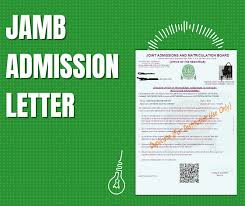
Your JAMB admission letter is downloaded from the CAPS portal after your admission offer has been activated and accepted. This letter confirms that JAMB recognizes your admission.
Your O-level result certificate or statement of result from WAEC, NECO, or NABTEB is required as your primary academic credential. If your certificate has not yet been released, the original statement of result is accepted.
Your birth certificate is required as proof of age. This can be from the hospital, the local government, or the National Population Commission. If no birth certificate exists, a sworn declaration of age from a magistrate court or high court is accepted as a replacement.
Your local government identification letter or certificate of origin is required to confirm your state and local government of origin. This document is used for allocating indigene quotas during admission.
Your primary school leaving certificate may be requested by some institutions as part of your educational history.
Your secondary school testimonial is a letter from your school principal confirming your attendance and graduation. It should be printed on the school’s letterhead and carry an official stamp.
Passport photographs in color against a white background are needed in multiple copies. Bring at least six copies as different offices may collect them separately.
A valid government-issued identity document such as a National ID card, voter’s card, or international passport is needed for identity verification.
A medical certificate of fitness issued by a registered government hospital or health center is required by many polytechnics to confirm that you are in good physical and mental health.
The Polytechnic Admission Process from Start to Finish
Knowing the step-by-step flow of the admission process helps you stay organized and meet every deadline without panic.
The process starts with JAMB registration, which typically opens at the beginning of the year. You complete your registration online through the JAMB portal, select your institution and program, pay the registration fee, and book a center for your CBT examination.
You write the JAMB UTME on your scheduled date and your results are released within a few days. Log into your JAMB profile to view your score and confirm your choices.
JAMB opens CAPS after the results are processed. Institutions begin uploading admission offers for qualifying candidates. You must log into your CAPS regularly to check for offers. When an offer appears, you have a limited window to accept or decline it.
After accepting on CAPS, your chosen polytechnic notifies you of their screening exercise. You complete the online screening process and attend any physical exercise required, presenting all original documents.
The institution releases its admission list on its portal and through JAMB CAPS. If your name appears, you proceed to school registration, collect your student ID, pay your acceptance fee, and begin the departmental and administrative registration process.
Common Reasons Candidates Are Denied Polytechnic Admission
Understanding why candidates fail to gain admission helps you avoid the same mistakes.
Many candidates are denied because their O-level subjects do not match their chosen program. Applying for Computer Science with O-level subjects that do not include Physics or Mathematics at credit level, for example, will result in automatic disqualification regardless of your JAMB score.
Some candidates present forged or altered documents during screening. This is a serious offence that results in permanent disqualification and may attract legal consequences.
Others miss screening deadlines because they do not monitor their CAPS portal or the polytechnic’s official communication channels. Once a screening window closes, it is rarely reopened for latecomers.
Some candidates choose programs without checking if their specific institution has NBTE accreditation for that program. Studying in an unaccredited program can render your diploma invalid.
Using results from more than two examination sittings, or attempting to count the same subject from two different sittings, will invalidate your O-level qualification at most institutions.
Scholarship and Financial Support for Polytechnic Students
Polytechnic education in Nigeria is generally more affordable than university education, but financial support options exist for students who need them.
The Nigerian Education Loan Fund (NELFUND) extends student loans to students in accredited tertiary institutions, including polytechnics. Eligible students can apply for loans to cover tuition and approved living expenses, with repayment beginning after graduation and employment.
State governments in Nigeria offer bursary awards to indigenes studying in any tertiary institution, including polytechnics. These bursaries are paid annually and vary in amount by state. Contact your state scholarship board for current information on how to apply.
The Tertiary Education Trust Fund (TETFund) also provides grants and interventions that benefit polytechnic infrastructure and, in some cases, funds academic staff development programs that indirectly improve the quality of education students receive.
Some professional bodies and corporate organizations offer sponsorships or scholarships for students in specific technical and vocational fields. These are worth researching from the start of your program.
Tips for Getting Admitted to a Polytechnic in Nigeria
Here are practical, proven strategies to improve your chances of gaining admission.
Score as high as possible in JAMB. The higher your score above the minimum, the better your ranking among competing candidates. Aim for at least 150 and push higher for competitive programs.
Confirm your O-level subject eligibility before registering for JAMB. Many students register for the wrong program or institution because they have not verified whether their O-level subjects qualify them. Avoid this by checking the specific program requirements on the NBTE website or the polytechnic’s official admission page.
Prepare your documents at least one month before screening season opens. Document problems are common and can delay you if you start gathering them too late.
Apply to programs that match your academic strengths. If your O-level results are stronger in arts and social science subjects, apply for business, mass communication, or public administration programs rather than stretching toward science programs where your grades may not be competitive.
Monitor your CAPS portal every few days once JAMB results are released. Admission offers are time-sensitive and missing the acceptance window can cost you a full admission cycle.
Apply to more than one institution if possible. JAMB allows you to list first and second choice institutions, and utilizing both choices increases your chances of receiving at least one offer.
Stay connected with the official communication channels of your chosen polytechnic. Many institutions post important screening and admission updates on their websites and official social media pages.
Frequently Asked Questions About Polytechnic Admission Requirements
Can I gain polytechnic admission with a JAMB score below 150?
The national minimum is 100, so a score between 100 and 149 technically qualifies you. However, most competitive programs at federal polytechnics have internal cut-offs above 150. For less competitive programs at state polytechnics, scores in the 100 to 149 range may be sufficient.
Is Mathematics compulsory for all polytechnic programs?
Mathematics is compulsory for nearly all polytechnic programs in Nigeria. The only exceptions are a small number of arts and language programs, but even in those, a credit in Mathematics is strongly recommended.
Can I apply for polytechnic admission if I am a WAEC awaiting result candidate?
JAMB allows awaiting result candidates to register and write the exam. However, you must have your O-level result available by the time of screening. Applying without O-level results at the screening stage will result in disqualification.
Does NABTEB qualify for polytechnic admission?
Yes. NABTEB results are accepted by most polytechnics and are particularly relevant for technical and vocational programs. Always confirm acceptance with your specific institution.
Can I combine WAEC and NECO results for polytechnic admission?
Yes. You can use results from two different examination bodies or two different sittings of the same body to complete your five required credit passes, as long as you do not count the same subject twice.
What happens if I am not on the first admission list?
Polytechnics release supplementary admission lists when initially admitted candidates fail to accept their offers or when additional slots become available. Monitoring your CAPS portal and the institution’s website regularly is important even after the first list is released.
Can private polytechnics have different requirements?
Private polytechnics are accredited by the same NBTE and follow the same JAMB framework, but they may have additional requirements such as entrance exams, interviews, or different internal cut-off marks. Always check the specific requirements of any private institution you are applying to.
Final Thoughts on Meeting Polytechnic Admission Requirements in Nigeria
The requirements for polytechnic admission in Nigeria are clear, structured, and very achievable for any student who takes the time to understand them and prepare accordingly. What separates successful applicants from unsuccessful ones is rarely talent or intelligence. It is preparation, attention to detail, and the discipline to follow through on every step of the process correctly and on time.
Your JAMB score, your O-level results, your documents, and your knowledge of the process are all things you can control and improve. Start early, verify every requirement for your specific program and institution, gather your documents well before screening season, and engage actively with your CAPS portal throughout the admission cycle.
Polytechnic education in Nigeria is a genuine and rewarding path. The institutions are producing skilled graduates in engineering, technology, business, science, and the arts who are contributing meaningfully to Nigerian society and the broader economy. With the right preparation, your polytechnic admission is absolutely within reach.
Admission requirements are reviewed and updated annually by JAMB and the NBTE. Always verify the most current requirements directly with your chosen institution and the official JAMB website before submitting your application.